Commercial EV Charging Solutions for Every Business
HRB designs and installs commercial electric vehicle charging stations for three distinct use cases. Many of our installations serve all three simultaneously.
Workplace Charging for Staff
Workplace EV charging installations give employees the ability to charge during the working day using RFID, app-based or PIN-controlled access to ensure charge points are reserved for authorised users. Smart load management is standard across all HRB workplace installations. Dynamic load balancing distributes available electrical capacity intelligently across all active charge points, meaning more charge points can be installed on existing infrastructure without costly supply upgrades.
Customer and Visitor EV Charging Points
Customer-facing commercial EV charging points require open or semi-open access, simple payment options and a user experience that reflects well on your business. HRB installs commercial EV charging stations for retail, hospitality, leisure, healthcare and public sector sites with contactless payment, RFID and open access options configured to match your commercial model. For businesses that want to generate revenue from their charging infrastructure, we set up charge point management software with custom pricing and income reporting from day one.
Fleet and Depot Charging
Fleet charging infrastructure needs to be reliable, scalable and designed around your operational patterns. HRB designs depot and workplace fleet charging systems around shift times and overnight dwell periods, using smart load management to distribute power across multiple vehicles without exceeding site electrical capacity. Phased installation means you can start with what your current fleet requires and expand cost-effectively as electrification progresses.
Which Commercial EV Charger Does Your Business Need?
Selecting the right charger type is one of the most important decisions in any commercial EV charging installation. HRB assesses your use case and recommends the configuration that best fits your site, your users and your budget.
Fast AC Chargers (7kW to 22kW)
The most widely used option for workplace and staff parking. Vehicles parked for a full working day or overnight receive a full charge; hardware costs are significantly lower than those of rapid DC units, and the electrical supply requirements are manageable within most commercial premises without major infrastructure works.
Rapid DC Chargers (43kW to 50kW)
Suited to customer-facing locations where dwell times are shorter, and users need a meaningful charge in 30 to 60 minutes. Retail parks, leisure venues and public car parks are the natural home for rapid charging infrastructure. Hardware and installation costs are higher, but for high-throughput customer charging sites, the faster charge time is essential.
Ultra-Rapid DC Chargers (100kW and above)
Appropriate for high-volume public charging hubs, large fleet depots and commercial charging sites where throughput is the primary objective. HRB manages the full project, including hardware specification, civil works and grid connection negotiations where required.
Grant Funding for Commercial EV Charging Installation
Government grant funding is available to significantly reduce the upfront cost of commercial EV charging installation for eligible businesses. HRB identifies and applies for all applicable funding as a standard part of every project.
The OZEV Workplace Charging Scheme provides up to £350 per socket for eligible businesses, charities and public sector organisations, capped at 40 sockets per applicant. Only installations completed by an OZEV-approved installer qualify, which is why HRB's OZEV approval is central to ensuring your installation is grant-eligible from the outset.
The EV Infrastructure Grant for Staff and Fleets offers up to £500 per socket, capped at 100 sockets, for larger organisations with more substantial charging requirements. For local authorities and public sector bodies, the Local Electric Vehicle Infrastructure fund provides capital funding for public charge point infrastructure, and HRB supports public sector clients through the full application and procurement process.
Grant eligibility depends on your organisation type, site configuration and installation specification. HRB assesses your eligibility during the free site survey and manages all application paperwork on your behalf.
Commercial EV Charging Installation Cost
The cost of a commercial EV charging installation varies depending on the number and type of charge points, existing electrical infrastructure, civil works required and whether a DNO application or supply upgrade is needed. HRB provides fixed-price quotations following the free site survey with no hidden costs and no additions after the quote is agreed.
As a general guide, fast AC units in the 7kW to 22kW range typically cost between £1,000 and £3,000 per unit in hardware alone. Rapid DC units in the 43kW to 50kW range typically cost between £10,000 and £25,000 per unit. Ultra-rapid DC units at 100kW and above range from £25,000 to £60,000 or more. Installation, civil works and infrastructure costs are additional and vary significantly by site, which is why the survey matters before any figure is treated as definitive.
Where grant funding applies, the net cost after support can be meaningfully lower than the headline installation cost. HRB presents the full financial picture, including grant income, in every proposal.
Pairing EV Charging with Commercial Solar and Battery Storage
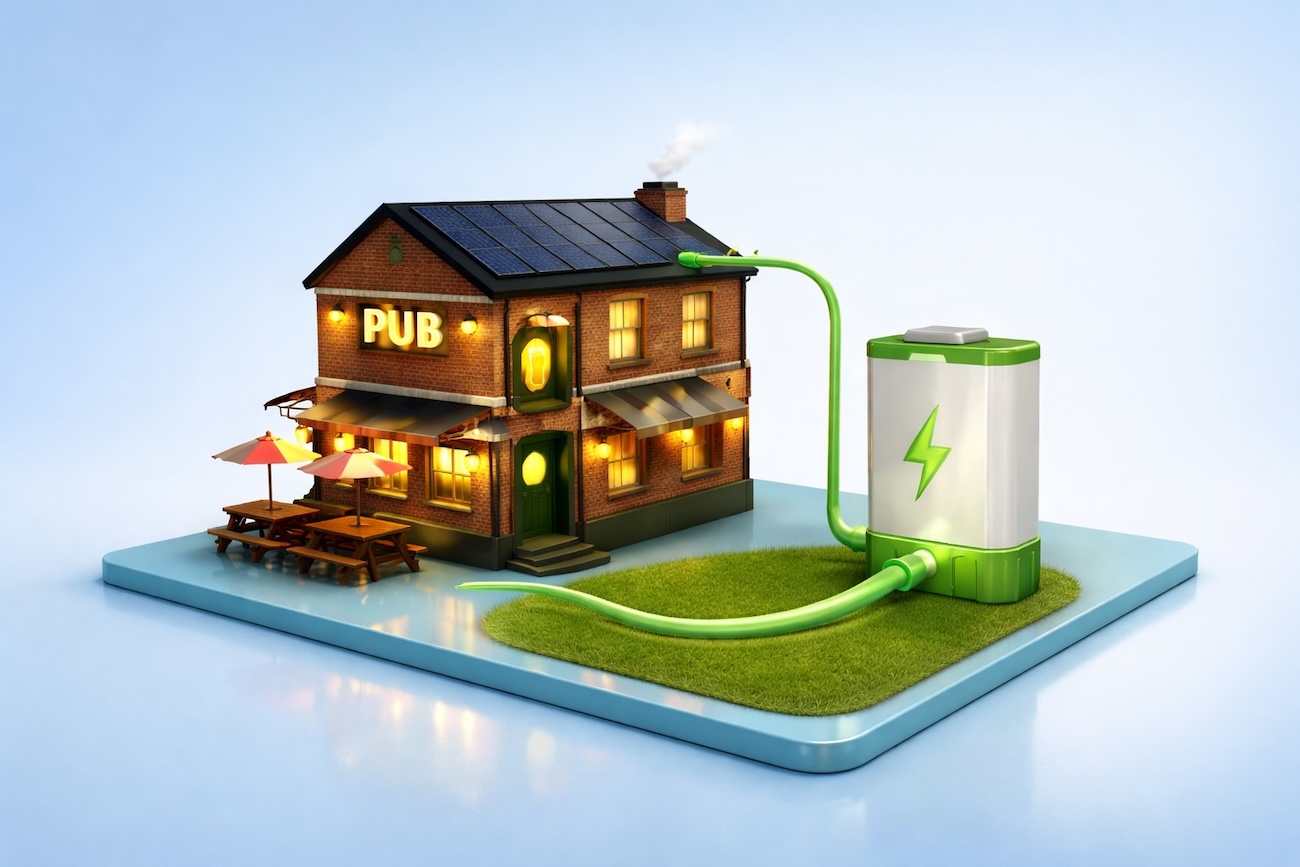
For businesses that have already invested in commercial solar installation or are considering doing so, pairing solar generation with EV charging creates a genuinely compelling energy strategy. Solar electricity generated during the day can be routed directly to charge points, reducing the cost per kWh to near zero during daylight hours. Solar Battery storage extends this further by capturing surplus solar generation for use during evening or overnight fleet charging sessions.
The combination of commercial solar panels, battery storage and EV charging infrastructure is the most cost-effective commercial energy strategy available to UK businesses today. HRB is one of the few contractors with the expertise to design and deliver all three as a fully integrated system. For businesses already operating a solar installation, commercial EV charging is a natural and financially compelling next step.