What's Included in HRB's Commercial Solar Panel Maintenance Service
Every HRB commercial solar maintenance visit is carried out by qualified, accredited engineers following a structured inspection protocol that covers all key system components. There are no shortcuts and no items skimmed over to save time. Here is exactly what we check, clean and report on.
Professional Solar Panel Cleaning
Panel cleaning is the most visible element of a commercial solar maintenance service, but it is also one of the most technically important. HRB uses pure water cleaning systems, deionised or purified water delivered through soft brushes, to clean both the panel face and the frame channels that can accumulate debris and become a nesting ground for moss and organic growth.
The use of purified water is deliberate. Tap water contains dissolved minerals that leave residue on the panel surface as the water evaporates, creating a film that reduces light transmission and can cause surface degradation over time. Purified water systems leave no residue, ensuring the panel surface is genuinely clean rather than simply rinsed.
During the cleaning process, our engineers visually assess each panel for surface damage, discolouration and signs of delamination, conditions that cleaning reveals but that can be missed in a purely visual inspection from ground level.
Full Electrical and Safety Inspection
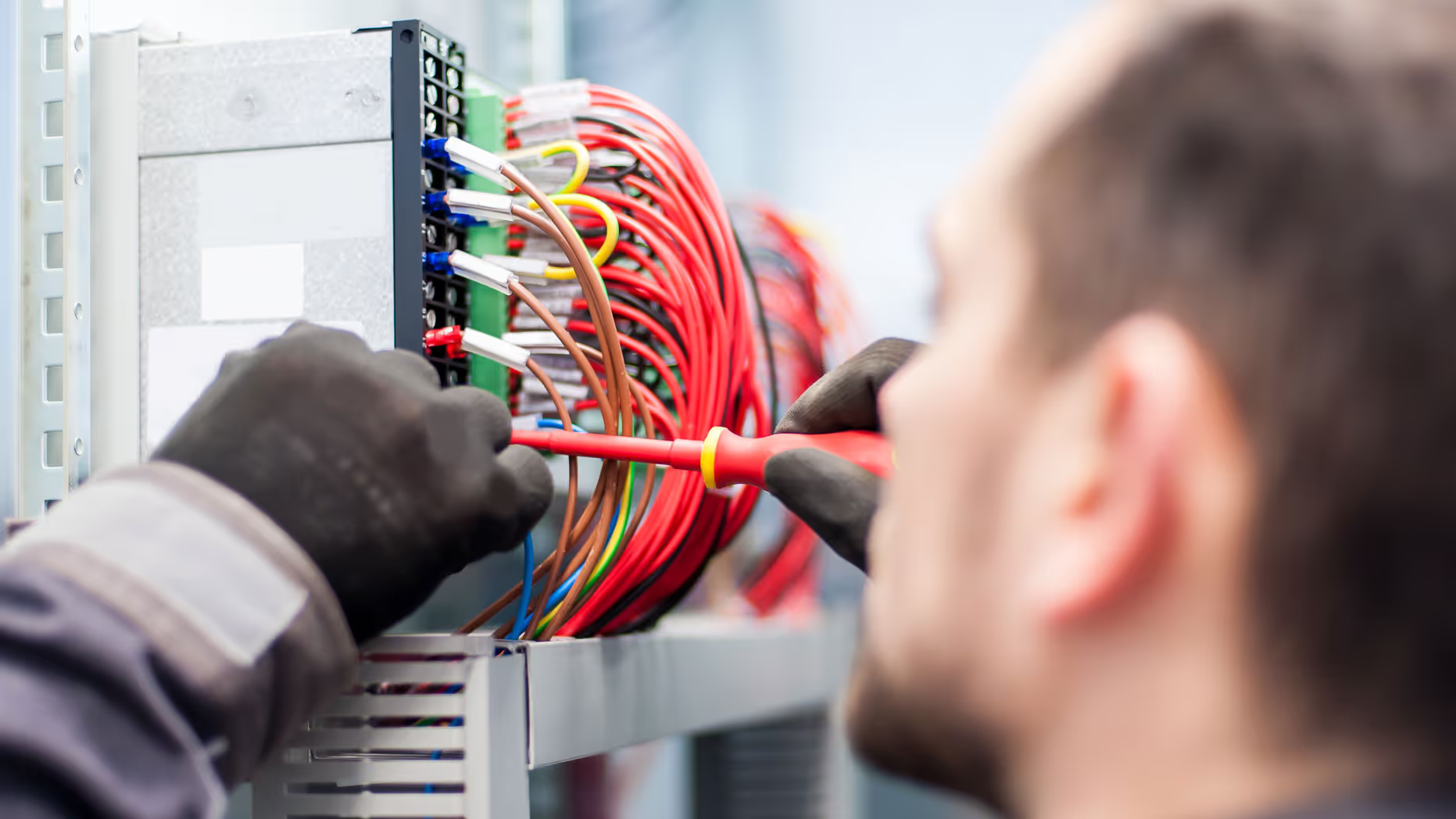
A clean panel on a faulty system still underperforms. HRB's electrical inspection covers the full DC and AC system, not just the panels themselves. Our engineers carry out DC and AC string testing, earth continuity and insulation resistance testing, and a thorough visual inspection of all cabling, connectors, junction boxes and DC isolators.
Every connection point is a potential failure point over a system's lifespan. Connectors corrode, cable sheaths degrade with UV exposure and thermal cycling, and junction boxes accumulate moisture over time. Our inspection identifies these issues before they become faults.
Thermal Imaging Inspection
HRB includes thermal imaging as part of its commercial solar PV maintenance service. Thermal cameras detect temperature differentials across panel surfaces that are invisible to the naked eye, identifying hot spots caused by failing cells, micro-cracks, bypass diode failure, partial shading effects and potential fire risk conditions before they become critical.
A panel operating with a significant hot spot is losing generation from the affected cell and placing thermal stress on surrounding cells. Thermal imaging finds these issues quickly and accurately, allowing targeted remedial action rather than guesswork.
Inverter Health Check and Testing
The inverter is the most mechanically complex component in a commercial solar PV system and the most common source of significant faults. HRB's inverter health check covers a review of the error log for historic fault codes, inspection of cooling fans and ventilation systems, verification of current firmware versions, testing of voltage and frequency output, and confirmation that data logging and remote monitoring communications are functioning correctly.
Inverter faults rarely announce themselves dramatically. More commonly, they manifest as gradual efficiency losses or intermittent performance dips that are easy to miss without a structured review of the error log data. Catching these early significantly extends inverter lifespan and avoids the cost and generation loss associated with an unplanned inverter failure.
Mounting Structure and Roof Integrity Check
The structural elements of a commercial solar installation are exposed to the elements continuously and require regular inspection. HRB's engineers check all mounting brackets, rails and fixings for corrosion, movement or fatigue, inspect roof penetrations for waterproofing integrity, verify ballast positioning on flat roof systems and review overall frame alignment.
A mounting system that has shifted or where fixings have begun to corrode represents both a generation risk and a structural one. Our inspection ensures that the physical integrity of the installation is maintained alongside its electrical performance.
Bird Proofing Inspection and Installation
Birds, particularly pigeons in urban and suburban locations, are a persistent and damaging presence on commercial solar installations. The cavity beneath a solar panel array provides an attractive nesting environment, and nesting material, droppings and debris accumulate rapidly once birds establish themselves. The consequences range from accelerated panel soiling and reduced generation to significant electrical damage from nesting material contacting cabling and connectors.
HRB inspects all existing bird-proofing measures during every maintenance visit, identifies any breach points or areas of nesting activity and, where required, installs mesh systems and additional deterrents to prevent re-entry. Addressing bird activity early is substantially cheaper than the remediation required once a nest has been established and damage has occurred.
Performance Data Review and Generation Report
Every maintenance visit concludes with a structured review of your system's performance data. HRB compares actual generation figures against expected output for the relevant period, identifies any underperforming strings or individual panels and reviews monitoring platform data for patterns or anomalies that a single-point inspection might not reveal.
You receive a full written maintenance report after every visit, including photographic documentation of the system condition before and after cleaning, test results, findings and any recommended remedial actions. This report serves as your ongoing maintenance record and provides the documentation required for warranty and insurance purposes.